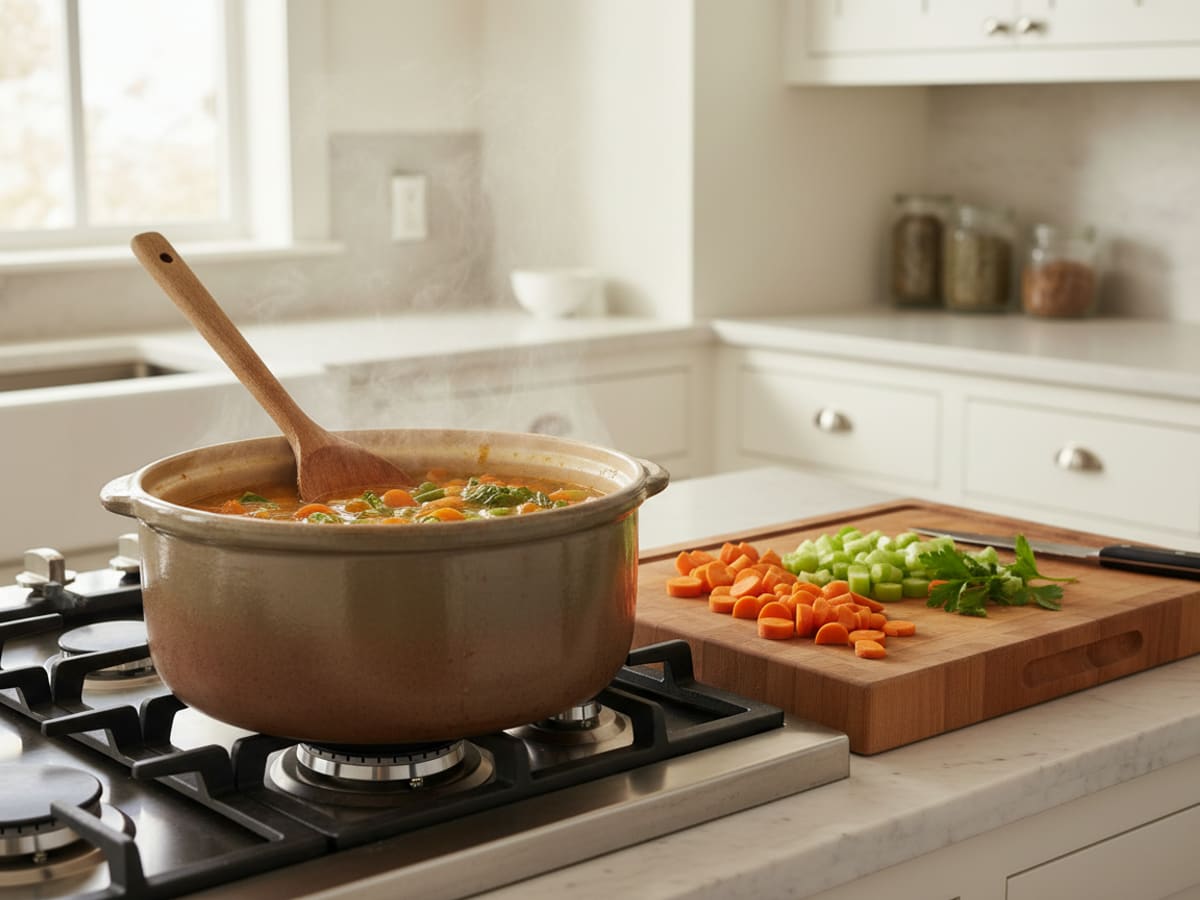
A Sunday Soup Pot and the Week It Carries
One big pot of soup can make several weekday meals easier. Here's a flexible way to build it from what you have.
Why a pot beats a plan
Most weeknight meal plans fall apart by Wednesday. A late meeting, a tired kid, a craving for something else entirely, and the carefully labeled containers sit untouched while you order takeout.
A big pot of soup is more forgiving. It doesn't ask you to decide on Tuesday what you'll feel like eating on Tuesday. It just sits in the fridge, ready, and it tastes good whether you're hungry at 5:30 or 8:00.
The trick is to think of it as one cooking session that covers several evenings, rather than a recipe you follow exactly. An hour or so on Sunday, mostly unattended, can carry you through a surprising stretch of the week.
A loose formula: base, vegetables, something filling
You don't need a recipe so much as a rhythm. Almost every good soup has three parts.
- The base: Start with onion, garlic, celery or carrot cooked slowly in a little oil until soft and fragrant. Then add liquid: broth, water, a can of tomatoes, or some mix of these.
- The vegetables: Whatever you have and like. Sturdy ones such as potatoes, squash, cabbage and root vegetables go in early. Tender ones such as zucchini, spinach and peas go in near the end.
- Something filling: Beans, lentils, barley, rice, small pasta, or shredded chicken. This is what turns a pot of vegetable broth into dinner.
Cook the base first, add the sturdy vegetables and the filling, let it simmer until everything is tender, and stir in the soft vegetables at the end. That's the whole method.
Using up the odds and ends
Soup is one of the kindest places for leftovers and slightly tired produce. Half a cabbage, a lone carrot, the last handful of green beans, a few mushrooms about to turn: all of it can go in.
Some things worth keeping in mind:
- Leafy greens that are wilting a bit still work well, since they'll soften anyway.
- Parmesan rinds, if you save them, add a savory depth when simmered in the pot. Remove what's left of the rind before serving.
- Cooked grains or roasted vegetables from earlier in the week can be stirred in at the end to warm through.
- Vegetables that are moldy or smell off should go in the compost, not the pot.
Think of it as a quiet way to waste less, which is its own small relief when the grocery bill is on your mind.
Seasoning in layers
Soup that tastes flat is usually under-seasoned, or seasoned only once at the very end. Building flavor in stages makes a bigger difference than any single ingredient.
- Season the onions and other base vegetables with a pinch of salt as they soften, so they release their flavor.
- Add dried herbs and spices, such as thyme, cumin, paprika or bay leaf, to the base before the liquid goes in. A minute in the warm oil wakes them up.
- Let the pot simmer, then taste. Add salt a little at a time, since broth and canned ingredients may already be salty.
- Right before serving, brighten it. A squeeze of lemon, a splash of vinegar, or a handful of chopped fresh herbs lifts everything.
That last step matters more than people expect. A soup that tastes a little dull often just needs something sharp or fresh at the end.
Storing and reheating sensibly
Cool the soup before it goes into the fridge, but don't leave it sitting out on the stove for hours. Dividing it into shallow containers helps it cool faster than leaving it in the big pot. Get it into the refrigerator within about two hours of cooking.
Most soups keep well in the fridge for three to four days. If you want it to last longer, freeze portions in containers with a little room at the top, since liquid expands as it freezes. Label them with the date so you aren't guessing later.
When you reheat, bring it to a steaming, bubbling hot temperature all the way through, stirring as you go. Reheat only what you plan to eat rather than warming the whole pot again and again.
Soups with cream, potatoes or pasta can change texture when frozen, so you may prefer to freeze the plain version and add those finishing touches later.
Making it different on day three
By the third night, the same bowl can feel like a chore. A few small changes make it feel like a new meal without any extra cooking.
- Top it with something crunchy: toasted bread, seeds, or crushed crackers.
- Stir in a spoonful of pesto, yogurt, or a drizzle of good olive oil.
- Add a different spice, such as chili flakes, curry powder or smoked paprika.
- Blend half the pot for a thicker, creamier texture, then stir it back in.
- Serve it over rice or toast, or alongside a simple sandwich or salad.
- Crack an egg into the simmering soup for a few minutes, cooking it until fully set.
The soup stays the same, but the meal doesn't. That small bit of variety is often what keeps a make-ahead habit going past the first week.