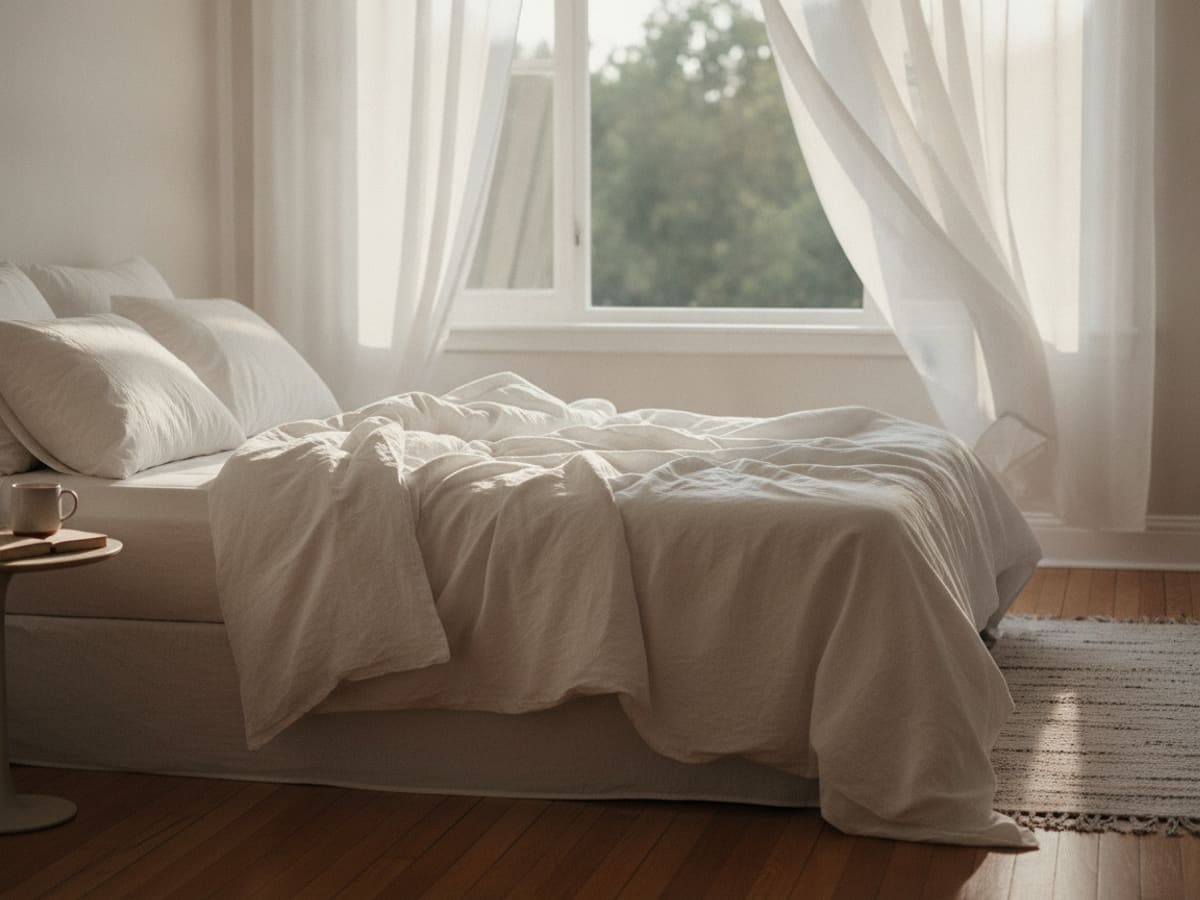
The Weekend Lie-In: How Much Is Too Much?
Sleeping late on Saturday feels good, but it can shift your body clock. Here's how to think about weekend sleep in a balanced way.
Why weekends tempt us to sleep late
By Friday night, a lot of us are running on fumes. The alarm that ruled the last five mornings is off, nobody needs us anywhere early, and a long morning in bed feels like something we've earned.
That feeling makes sense. If your weekdays are short on sleep, your body is likely asking for more, and sleeping in is a natural response. Nothing is wrong with you for wanting it.
The question is not whether a lie-in is allowed. It's how big a swing you're making from your weekday routine, and how your body responds to it.
How a shifting schedule can feel
Your body keeps an internal clock that likes regularity. It helps set when you feel sleepy, when you feel alert, and even when you get hungry. When you go to bed and wake up much later on weekends, that clock can drift, a bit like flying a few time zones west on Saturday and flying back on Monday.
Some people notice the effects, and some barely do. Common experiences include:
- Feeling groggy or foggy on Monday morning
- Struggling to fall asleep on Sunday night, which makes Monday even harder
- Waking up from a long sleep-in feeling more tired than expected
- A mid-afternoon slump that seems out of proportion
Researchers are still working out how much a weekend sleep-in matters for different people, so there's no single rule that fits everyone. What we can say is that a moderate shift tends to be easier on the body than a dramatic one.
A gentler way to catch up
If you're tired, rest is a good idea. You just don't need to overhaul your whole schedule to get it. Here's a middle path:
- Pick a modest lie-in. Waking an hour or so later than usual is often easier for your body to absorb than sleeping half the day away.
- Keep your bedtime in the neighborhood of normal. Going to bed much later on Friday and Saturday is often what pushes the clock around.
- Add a nap if you need one. A short nap early in the afternoon can take the edge off without making it harder to sleep that night.
- Go to bed at your usual time on Sunday, even if you don't feel sleepy yet. Dim the lights and wind down a little earlier.
- Plan something pleasant for Monday morning, like a good breakfast or a walk, so waking up feels less like a cliff.
Light and morning routines
Light is one of the strongest signals your internal clock responds to. Getting outside or sitting near a bright window soon after you wake helps tell your body that the day has started. That can make it easier to feel sleepy at a reasonable hour that night.
If you do sleep later on Saturday, try opening the curtains right away and having breakfast near the light. A short walk works well too, even a slow one around the block.
In the evening, the reverse helps. Lower the lights, put screens a little farther from your face, and let the house wind down. None of this is magic, but small cues add up over a few days.
A few other morning habits can steady things:
- Eat breakfast at a fairly regular time
- Go easy on caffeine late in the day, since it can linger longer than we expect
- Get out of bed within a short while of waking, rather than dozing in and out for hours
When tiredness keeps showing up
Sometimes the weekend lie-in isn't really the issue. If you need to sleep in for hours every weekend just to feel human, that may be a sign your weekday sleep is too short, too broken, or both.
It can help to look at the bigger picture. Are you giving yourself enough time in bed on weeknights? Is something keeping you up, like late work, a noisy room, stress, or a racing mind? Even small changes, such as a slightly earlier bedtime on a few weeknights, can reduce how much you feel the need to catch up.
It's also worth noticing how you feel during the day. Being sleepy now and then after a rough week is common. Being tired most days, no matter how much you rest, is a different pattern and deserves attention.
Talking to a professional about persistent sleep trouble
Sleep is tied to so many parts of daily life that it's worth taking seriously when something feels off. A doctor or a sleep specialist can look at your habits, your health, and any medications you take, and help figure out what might be going on. It can help to jot down your bedtimes, wake times, and how you feel each day for a week or two before you go.
For most of us, the weekend lie-in is a small pleasure, not a problem. Keep it modest, let the morning light in, and be kind to yourself on Monday.